
Last month, WIS students experienced a truly fulfilling and exciting time as we hosted two major fairs in succession: the Science Fair and the Art & Design Fair. This time, our young learners took center stage, growing through exploration and moving forward through reflection.
Today, let’s step into these two vibrant fairs and witness the brilliance of their academic achievements and boundless creativity!


With the theme Walk in Street, students transformed the atrium into an immersive city street district. The entire atrium was divided into two sections: the first floor featured an art district in a shop-window style, where each piece resembled a “creative shop”, the second floor hosted the Design section, featuring everything from Recycle Projects to Corporate Identity Design, Lighting Design, and Inclusive Playground Design.

Stepping into the art section on the first floor, visitors felt as though they had entered a bustling and poetic “city street”.
At WIS, Arts Education inspires students to express themselves, stay active, and think creatively. These programs nurture imagination, build confidence, and encourage a healthy balance between mind and body.
Instead of traditional display racks, the area was filled with creative “shop windows.” Students subtly integrated artworks with elements of everyday life, showing every visitor how art is rooted in reality.
PYP students focused on childlike wonder, handcrafts, and life-inspired creations, experiencing the joy of art through relaxed practice.
Grade 1 – Paper Weaving

MYP students engaged in more systematic and profound explorations of art and design.
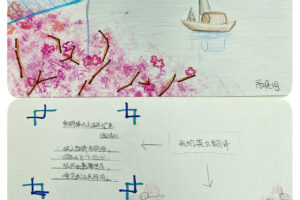
Grade 6: Tunnel Book


If the first floor was a place for emotional reflection, the Design section on the second floor was a burst of rationality. It focused on design thinking, showcasing how students apply creativity to solve real-world problems.

From Recycle Projects to Inclusive Playground Design, and from Corporate Identity Design to 3D Design, the students’ works covered environmental protection, humanistic care, and business logic.

Here, design is no longer just about “aesthetics” but has become a complete set of solutions. MYP Design focuses on helping students develop their design and technology skills through practical problem-solving.
Throughout the course, students learn how to apply design principles and follow the design cycle, which includes researching, analyzing problems, generating ideas, creating solutions, and evaluating their work.
They work on both digital and product design projects. Along the way, students also build important skills such as creativity, critical thinking, media literacy, and collaboration.
Designing for Well-being


In an atmosphere filled with exploration and creativity, this Science Fair offered students a vibrant learning journey.
From cutting-edge technology to real-world issues, from hands-on practice to deep thinking, every moment shone with the light of curiosity.

Professor Feng from Zhejiang University delivered an engaging lecture on drones. From fundamental principles to real-world applications, students gained insight into the science behind the technology and developed a broader vision of future innovations.

Following the lecture, students enjoyed an impressive drone show, further sparking their enthusiasm for engineering and innovation.


Stepping into the classrooms, PYP students were immersed in a variety of scientific experiments. Through hands-on exploration and observation, they deepened their understanding of scientific principles while continuously asking and solving questions. Each small experiment marked an important step into the world of science and reflected their spirit of inquiry.

In addition, MYP students took part in hands-on experiences with drones and remote-controlled boats in the GYM. Through operating and adjusting the devices, they directly experienced the appeal of applied technology while strengthening their problem-solving skills and teamwork through continuous experimentation.


MYP students presented themed projects on climate change, covering topics such as the greenhouse effect, carbon cycle, and the impact of human activities along with possible solutions. With clear structure and logical progression, they used models and data analysis to transform abstract scientific concepts into concrete and vivid expressions, inspiring deeper thinking and a stronger sense of responsibility toward environmental issues.

Through both the Art & Design Fair and the Science Fair, WIS students showcased not only their learning outcomes, but also their curiosity, creativity, and confidence. From imaginative artistic expression to thoughtful scientific inquiry, every project reflected their passion for exploration and growth. We look forward to seeing our young learners continue to create, innovate, and inspire in the future.