
走进WIS
特色中文课程
作为一所扎根于杭州的国际学校,WIS一直强调中国情怀和国际视野的结合,只有具备扎实深厚的本土情怀,才能在走向世界的时候越发广博开阔,越加坚定自信。
严谨而扎实的中文课程体系,构成了WIS卓越学术图景中的独特文化标识。WIS 坚信不仅要提供严谨的英语学术和充实课程,而且我们相信所有学生也必须理解和欣赏中国文化和语言的真正精髓。
依托IB课程认证的严谨框架,WIS中文课程在PYP(小学项目)与MYP(中学项目)阶段构建了连贯而进阶的教学体系,我们的中文课程分为面向以中文作为母语同学的CLL和以中文作为非母语同学的CAL。
今天就让我们一起走进精彩的CLL课程!
PART.ONE
WIS小学部中文课程
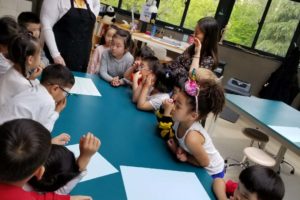
在我们小学部,中文学习是一场以儿童为中心、跨越学科界限的探究之旅。我们以IB课程框架为指导,围绕超学科主题(UOI)和核心概念,在真实的语境中展开探究式教学。学生通过“做中学”、“玩中学”,将语言习得融入到对世界的理解与意义建构之中。
单元整合,构建语境
我们打破传统单一教材的局限,将中文学习与UOI深度结合。语言技能并非孤立存在,而是在跨学科的探究中自然习得,充分体现ATL的运用。
其实,中文学习相对困难的主要原因是:中文课没有像英文课那样丰富的分级读物。针对这个突出问题,WIS独立研究编制了一套《国学口袋书》,将流传千年的国学经典,装进了孩子们的口袋。
培养素养,探究为先
教学过程坚持以学生为中心,通过引导式的提问与实践活动,培养学生的批判性思维、合作能力与沟通能力。我们致力于在日常教学中塑造IB十大培养目标所要求的全面素养。
例如,在一年级第三单元“我的家庭历史帮助我们理解自己和他人的文化”中,中文学习围绕“中国的姓氏传统”这一文化主题展开。课堂并非机械地学习语法,而是让学生带着“你为什么姓这个?”的疑问,通过诵读《百家姓》等传统素材来认识汉字、理解姓氏的起源和意义。
学生需要运用 Research skill和 Communicating skills等ATL技能来完成探究作业,收集自己姓氏的中文写法、家族的居住地,甚至探究姓氏的含义,并进一步探究了家谱、宗祠等与姓氏相关的文化载体。
思辨为径,贯通表达
WIS相信,在中文课堂中,对批判性思维的培养与语言习得同等重要。我们不满足于学生“知道什么”,更关注他们“如何思考”。通过系统训练,学生能够从多角度看待问题,从而实现语言、文化与思维能力的全人发展。
三年级和四年级的戏剧思辨课打破了学科壁垒,学生们通过戏剧表演和思辨训练,不仅锻炼了语言表达和逻辑思维,更在讨论与碰撞中培养了独立思考的能力。
五年级及以上的同学将有机会加入WIS中文辩论社,将所学的批判性思维技能,围绕复杂的社会和文化议题展开深度辩论。
PART.TWO
WIS中学部中文课程
在我们初中部,中文学习是一场融合经典与当代、语言与文化的深度探究之旅。
我们以 IB课程框架 为指导,围绕核心概念,在全球背景下展开探究式学习。学生不仅学习语言,更在真实语境中理解文化、构建意义。
深读精思,滋养素养
每学期至少完成一部整本书深度阅读,引导学生沉浸文学世界,培养文学感悟力与文本分析能力。
六年级《鲁滨逊漂流记》整书阅读中,学生不仅分析文本,还结合现实创作了《荒岛生存手册》。
从衣、食、住、行等角度梳理书中经验,并补充现代生存策略,锻炼了整合信息与创新应用的能力。
在七年级《世说新语》阅读中,学生走进思想奔涌的魏晋时代,与风骨独具的人物深度对话。通过分析人物言行与时代背景,学生不仅理解历史情境中的生命选择,更思考个人与时代的关系,以及如何在变局中保持精神的独立与品格的坚守。
评估驱动,赋能成长
通过多元化、真实性的评估任务与持续反馈,我们支持学生达成学习目标,并鼓励他们 发出真实声音,积极影响社区与社会
八年级“新闻单元”与学校“精神周”完美结合,学生们化身校园记者,分组开展每日采访,与全校师生深度对话,在实践中掌握了新闻采编的真实技能。这种基于真实情境的学习,帮助孩子们将课堂知识转化为现实能力,搭建起连接文本、生活与未来发展的成长桥梁。
九年级的“文言文中的智慧与情怀”单元更是别具匠心。学生们自主选出最具共鸣的三位历史人物——诸葛亮、范仲淹、张岱,精心策划了一场面向八年级学弟学妹的“华夏风骨”工作坊。
通过生动讲述人物的生平故事、高光时刻与人生挑战,并在“思辨情景互动”中带领观众穿越历史,身临其境地感受先贤在关键抉择中展现的智慧与情怀。
创新实践,知行合一
我们认为,真正有效的学习,往往在创造中发生。MYP中文课程致力于突破传统框架,鼓励学生将所学知识与技能整合,引导学生超越文本理解,以鲜活、个人化的方式呈现他们对复杂文化概念的深度理解力。
在六年级,学生们完成了从读者到作者的跨越。他们独立创作并共同汇编了微型小说集《初芒》。从故事构思、文本撰写,再到排版设计、编辑成册,学生们体验了完整的文学创作与出版流程。
在九年级,古典文本的学习跳出了注解与赏析,变得可感可互动。学生们以“古人朋友圈”的创意形式,化身范仲淹、张岱等文人,依据历史语境与人物心境,发布一条“朋友圈”,并通过精心设计的评论区互动,生动展现文人间的思想交流与精神共鸣。让静态的文言“活”在当下的表达里。
PART.THREE
通过将中国文化精髓融入 IB 中文课堂中,并结合包括国画、书法和中国文学在内的多元文化活动,我们成功地为学生建立了强大的文化连接。
这确保了他们在接受最高质量中文教学的同时,能够真正理解和欣赏中国文化的价值。最终,WIS 的教育目标是培养出既拥有全球视野,又深刻植根于中国文化的全面人才。
Chinese Curriculum
in WIS
As an international school in Hangzhou, WIS emphasizes the fusion of Chinese heritage with global perspectives. This approach ensures students develop a strong sense of identity while embracing the world.
A rigorous and solid Chinese curriculum constitutes a unique cultural identity within WIS’s landscape of academic excellence. WIS strongly believes in not only offering a rigorous academic and enrichment program in English, but we believe that all students must also understand and appreciate the real essence of the Chinese culture and language.
Anchored in our IB programme, the WIS Chinese curriculum establishes a coherent and progressive framework across the PYP and MYP stages. Our Chinese curriculum is divided into CLL for students who use Chinese as their mother tongue, and CAL for students who use Chinese as a non-native language.
Today, let’s take a look at the fascinating CLL course!
PART.ONE
WIS PYP CLL
In our PYP, Chinese language learning is a journey of inquiry that is child-centered and transcends disciplinary boundaries. We are guided by the IB curriculum framework, initiating inquiry-based teaching and learning around UOI and key concepts within authentic contexts. Students “learn by doing” and “learn by playing,” integrating language acquisition into their understanding of the world and the construction of meaning.
Unit Integration,
Context Construction
We break the limitations of traditional single textbooks, integrating Chinese learning deeply with the UOI. Language skills are acquired organically through transdisciplinary inquiry, fully embodying the application of ATL skills.
In fact, one major reason why learning Chinese is often considered difficult is the lack of a rich variety of leveled reading materials in Chinese classes, compared to English classes. To address this prominent issue, WIS has independently researched and compiled a set of “Chinese Classics Pocket Books”, which condense thousands of years of traditional Chinese culture into small-sized books that can easily fit into children’s pockets.
Cultivating Attributes,
Inquiry First
The teaching process adheres to a student-centered approach, utilizing guided questions and practical activities to foster students’ critical thinking, collaboration, and communication skills. We are dedicated to nurturing the holistic attributes required by the IB Learner Profile in everyday teaching.
For example, in G1 Unit 3, Our family histories help us understand our own and others’ cultures, Chinese learning revolves around the cultural theme of Chinese Surname Tradition. The classroom is not focused on the mechanical study of grammar, but rather prompts students with the question, Why is your last name this? They recognize Chinese characters and understand the origin and meaning of surnames by reciting traditional materials such as the Bai Jia Xing .
Students are required to use ATL skills such as Research skills and Communicating skills to complete their inquiry tasks, which involve collecting the Chinese writing of their surname, their family’s place of residence, and even inquiring into the meaning of the surname. They further explore cultural carriers related to surnames, such as family trees and ancestral halls.
Reasoning as a Pathway:
Connecting Thought and Expression
WIS firmly believes that cultivating critical thinking in the Chinese classroom is as important as language acquisition itself. We are not satisfied with what students merely know, but focus on how they think. Through systematic training, students are empowered to view issues from multiple perspectives, thereby achieving holistic development in language, culture, and cognitive abilities.
In the Drama and Critical Thinking Course, G3 and G4 students were led to develop their language expression and logical thinking through drama performances and debate training, and independent thinking was cultivated through discussions and exchanges.
Students in G5 and above will have the opportunity to join the WIS Chinese Debate Club, where they apply the critical thinking skills they have learned to engage in in-depth debates on complex social and cultural issues.
PART.TWO
WIS MYP CLL
In our MYP, Chinese learning is a deep journey of exploration that weaves together the classic and the contemporary, language and culture.
Guided by the IB curriculum framework, we design inquiry-based learning around key concepts within global contexts. Students not only learn the language, but also understand culture and construct meaning through authentic situations.
Close Reading & Deep Thinking:
Nurturing Literacy
Each semester, students complete an in-depth study of at least one full book, immersing themselves in the world of literature while developing literary appreciation and text analysis skills.
In the G6 full-book reading of Robinson Crusoe, students analyzed the text and created a Desert Island Survival Guide.
Drawing on the book and modern survival strategies, they summarized ideas for clothing, food, shelter, and transportation, developing skills in information integration and creative application.
In the G7 reading of A New Account of the Tales of the World, students explored the dynamic Wei–Jin era and its distinctive figures. By analyzing characters and their historical context, they learned about the life choices of the time and reflected on how individuals can uphold independence and integrity in times of change.
Assessment for Growth:
Empowering Learners
Through diverse and authentic assessment tasks, together with ongoing feedback, we support students in reaching learning goals and empower them to express their genuine voices—making a positive impact on both their community and the world.
In the G8 News Unit, students connected their learning with the school’s Spirit Week by becoming campus reporters. Working in groups, they conducted daily interviews and engaged in meaningful conversations with teachers and students, gaining authentic news-writing and reporting skills through practice. This real-world learning experience helped them transform classroom knowledge into practical abilities, building a bridge between texts, daily life, and future development.
In the G9 unit Wisdom and Values in Classical Chinese Texts, students designed a creative learning experience. They selected three historical figures—Zhuge Liang, Fan Zhongyan, and Zhang Dai—and curated a Spirit of Chinese Culture workshop for Grade 8 students.
Through engaging stories about each figure’s life, defining moments, and challenges, along with interactive scenario-based discussions, they guided the audience to step into history and experience the wisdom and moral vision shown in pivotal decisions.
Innovative Practice,
Unity of Knowledge and Action
We believe that truly effective learning often happens through creation. The MYP CLL is committed to breaking through traditional frameworks, encouraging students to integrate the knowledge and skills they have acquired. We guide students to move beyond textual comprehension, presenting their deep understanding of complex cultural concepts in vibrant, personalized ways.
In G6, students made the leap from readers to authors. They independently wrote and collaboratively compiled a collection of short stories titled First Sprout. From developing plot ideas and drafting their texts to designing layouts and producing the final book, students experienced the full process of literary creation and publication.
In G9, the study of classical texts moved beyond annotations and analysis to become tangible and interactive. Through the creative task of designing an Ancient Scholars’ Social Feed, based on historical context and the characters’ inner worlds, they crafted posts and designed interactive comment sections that vividly showcased intellectual exchange and shared values among scholars. This allowed classical texts to come alive through contemporary forms of expression.
PART.THREE
By integrating the essence of Chinese culture into our IB-enhanced global curriculum and daily Chinese language classrooms, and combining this with diverse cultural activities including brush painting, calligraphy, and Chinese literature, we have successfully established strong cultural connections for our students.
This ensures that while receiving the highest quality Mandarin language instruction, they are also able to genuinely understand and appreciate the value of Chinese culture. Ultimately, WIS’s educational goal is to cultivate well-rounded individuals who possess both a global perspective and deep roots in Chinese culture.

Leave a Reply
Your email is safe with us.
You must be logged in to post a comment.